


When freedom ceases to be a declaration and becomes a concrete possibility.
Beyond Representation
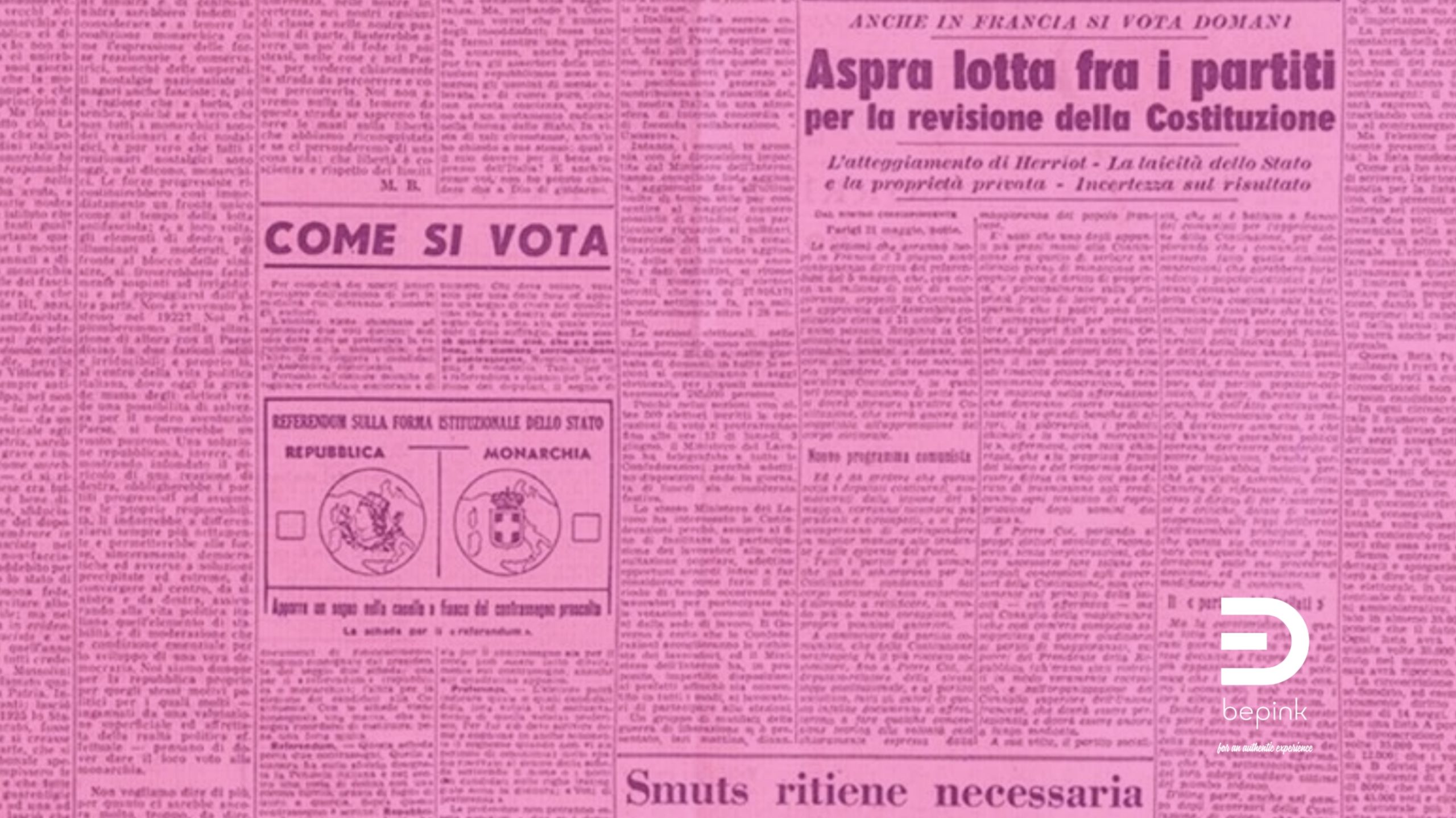
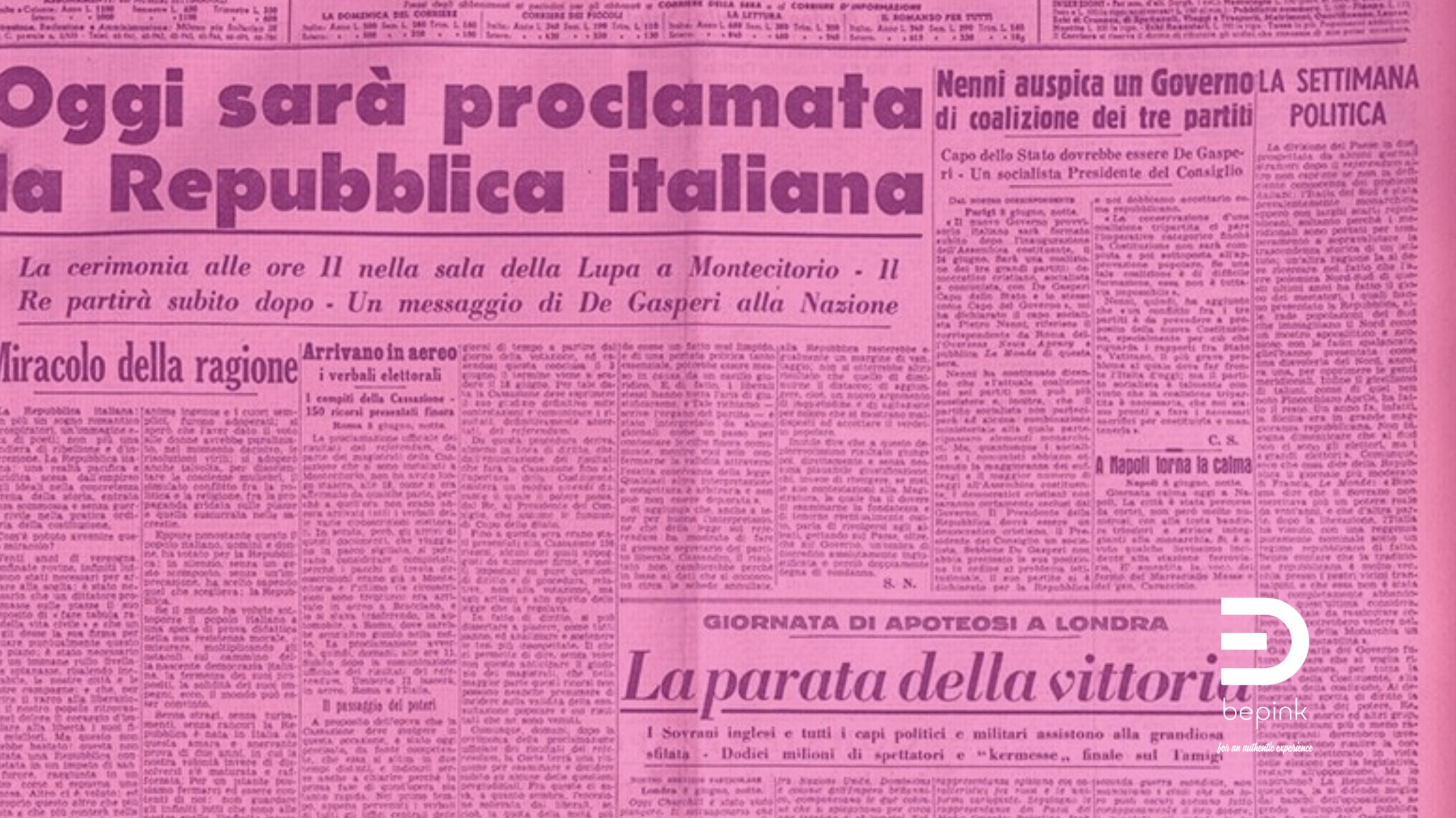
Eighty years after 2 June 1946, we continue to celebrate the birth of the Italian Republic through images that have become both familiar and meaningful: the referendum between Monarchy and Republic, universal suffrage, and the twenty-one women elected to the Constituent Assembly.
Adele Bei, Bianca Bianchi, Laura Bianchini, Elisabetta Conci, Maria De Unterrichter Jervolino, Filomena Delli Castelli, MariaFederici, Nadia Gallico Spano, Angela Gotelli, Angela Maria Guidi Cingolani, Nilde Iotti, Teresa Mattei, Lina Merlin, AngiolaMinella, Rita Montagnana, Maria Nicotra Fiorini, Teresa Noce, Ottavia Penna Buscemi, Elettra Pollastrini, Maria MaddalenaRossi e Vittoria Titomanlio.
Their election undoubtedly marked women’s full entry into political citizenship. Yet the historical significance of their presence cannot be reduced to representation alone. The Constituent Women took part in a deeper transformation: redefining what the Republic would come to regard as essential to democratic life.
A Historical Constellation
The twenty-one women who entered the Constituent Assembly did not come from the same world. They did not belong to the same generation, share the same political culture, or originate from the same regions. Among them were communists, Christian democrats, socialists, and a representative of the Common Man’s Front. They were teachers, educators, trade unionists, activistsfrom Catholic associations, political organisers, and women who had experienced imprisonment, internal exile, underground resistance, and the struggle against fascism.
A plurality of experiences, political cultures and life trajectories forming a historical constellation.
Within this constellation, we can identify different generational units which, having lived through the same historical rupture, found themselves confronting common challenges. What united them was not similarity, but history itself.
And it is precisely this diversity that makes their contribution so significant.
What Changes Is the Regime of Visibility
Education, work, motherhood, child welfare, and social protection did not suddenly enter public debate because of the Constituent Women. These were already collective concerns. They were already arenas in which opportunities and disadvantages,autonomy and dependency, inclusion and exclusion were distributed. They were already places where power was exercised.
What began to change was their status — their regime of visibility.
Every society constructs a hierarchy of what it considers important. Some phenomena are illuminated, discussed, and recognised; others remain in the background, despite profoundly shaping people’s lives. Paid work was visible — and remains so. Care work far less. Institutions are visible. The conditions that enable citizens to participate fully in social and democratic life are often far less visible, both then and now.
The Constituent Women helped shift this boundary. They helped reveal that many aspects of social life are not private or marginal matters, but factors that directly affect the quality of citizenship itself.
The Conditions of Freedom
Their contribution made it clearer that citizenship depends not only on the right to vote or on formal access to institutions. It also depends on the conditions that allow people to exercise those rights in practice.
Citizenship, in this sense, cannot be reduced to the mere possession of a legal status: a person may have the right to study, to work or to participate in public life while lacking the conditions necessary to make those rights meaningful.
For this reason, the Constitution does not merely proclaim freedoms; it seeks to build the conditions that make them genuinely attainable.
Here lies one of the Republic’s most profound insights.
Freedom is not conceived simply as the absence of constraints. It is connected to the material conditions of existence.
The Republic does not merely recognise rights. It creates an institutional architecture designed to make them effective.
Public education, labour protections, support for motherhood, social welfare, equal dignity and democratic participation are not separate chapters. They are elements of a single constitutional project.
Article 3 perhaps offers the clearest expression of this vision, assigning to the Republic the responsibility of removing the economic and social obstacles that, in practice, limit citizens’ freedom and equality.
A right truly exists only when it can be exercised: this is the difference between a freedom that is declared and a freedom that is lived.
An Open Question
Eighty years later, the legacy of the Constituent Women continues to challenge democracy.
What do we consider essential? Which conditions truly make freedom possible? What do we choose to see, and what do we continue to leave in the background?
The history of citizenship is, ultimately, the history of this gradual widening of our field of vision.
Perhaps this is the question the Constituent Women continue to ask us today — not as figures to be commemorated, but as interlocutors in the present.
Many years later, Teresa Mattei would said:
“You are our future. Try to resemble us, but be better than us. Try to achieve what we were unable to achieve: an Italy truly founded on justice and freedom.”
Eighty years later, that promise continues to challenge us.
2 June 1946 — 2 June 2026
80 Years of the Republic