

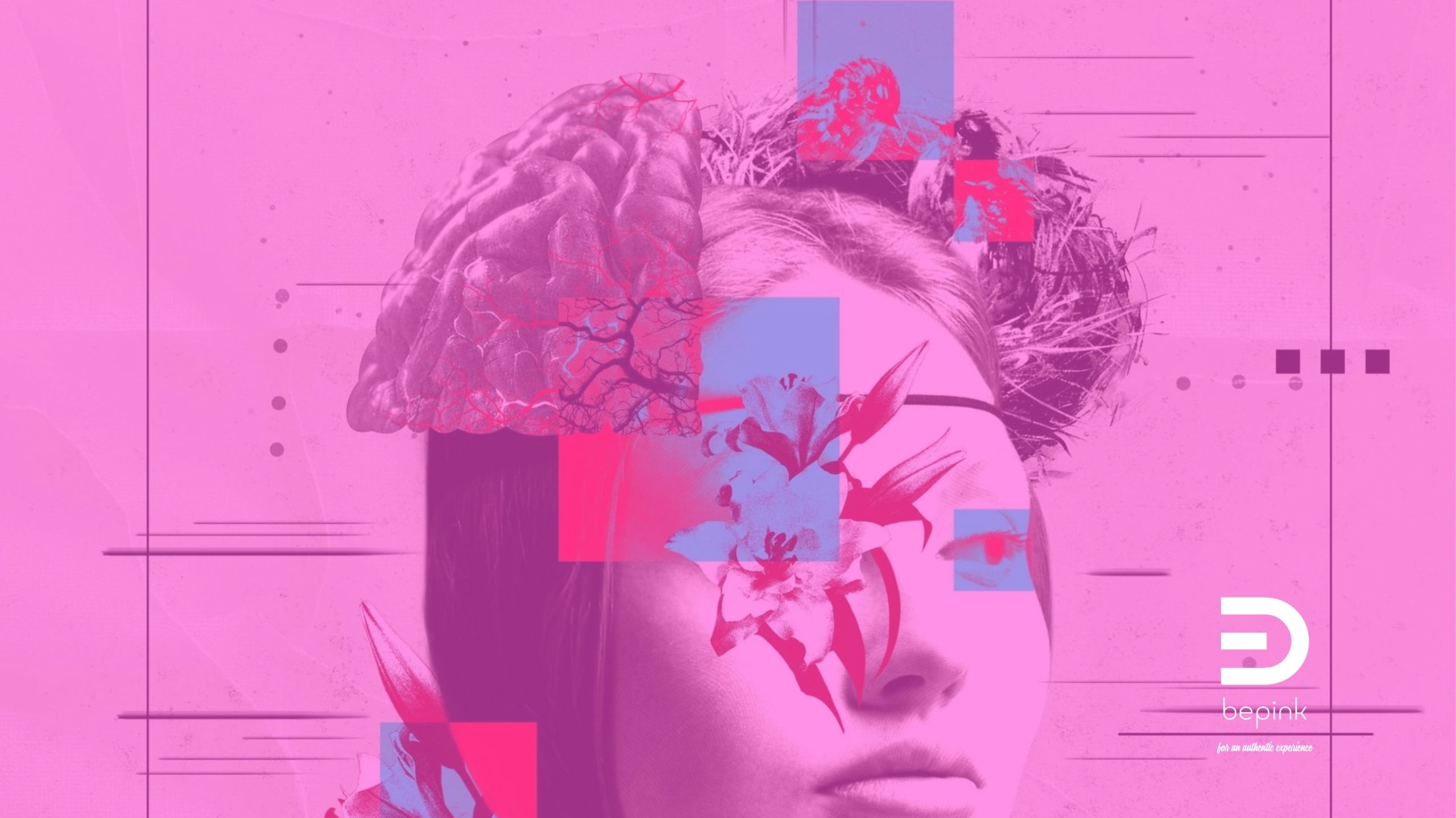
The Impossible as the Art of Changing Perspective
In literature, the monstrous is also a matter of perspective.
As All Hallows’ Eve approaches, Mary Shelley’s creature offers an opportunity to explore one of imagination’s most intriguing capacities: making visible what we do not yet know how to recognise.
From Chaos to the Creature
The year is 1816, remembered as the year without a summer. The eruption of Mount Tambora in April 1815 had helped disrupt Europe’s climate.[1] On the shores of Lake Geneva, around 16 June, Lord Byron, Percy Shelley, Mary Godwin, Claire Clairmont and John Polidori spend their days amid thunderstorms, conversations and Gothic tales. A literary challenge set by Byron will give rise to two figures destined to outlive their creators: Polidori’s aristocratic vampire and the creature in Frankenstein.[2]
Meanwhile, the world is changing. The First Industrial Revolution is transforming the relationship between energy, labour and production, while research into physiology and galvanism is raising new questions about the boundaries of life. In the background lingers an older alchemical imagination, with its promises of transforming matter. Ancient desires, new possibilities.
Mary Shelley creates from chaos: she brings together cultural, scientific and philosophical influences in an impossible narrative capable of reopening age-old questions. A being assembled by human hands comes to life. The experiment succeeds. Its creator flees from his own creation.
The Forms of Judgement
The creature observes, learns and longs to be recognised. Yet it is judged before it is known. Fear does not simply accompany the gaze: it shapes judgement.

Emotions, after all, are not unthinking impulses. They play a part in how we interpret the world, assign value and recognise what matters.[3] Rejection and abandonment do not absolve the creature of responsibility for its violence, but they prevent us from considering it in isolation from the relationships that have shaped its existence.
The horror extends further: it runs through the creator’s choices, the creature’s actions, the longing to belong and the responsibilities borne by both. The impossible premise of the narrative calls into question a judgement that had seemed immediate.
Desires, Beliefs, Actions
The tension between what we are capable of creating and what we are prepared to judge also runs through contemporary innovation. Every project embodies choices: the ends pursued, the criteria adopted, the conditions of use and the consequences deemed acceptable.
The fact that a system works does not, in itself, guarantee that we understand its underlying assumptions, limitations or consequences. When its effects touch people’s lives, it is not enough to establish that it works: we must be able to question its criteria, challenge its outcomes and establish where responsibility lies. Risk assessment belongs within the design process, not at the point when the project is already complete.

This is the thinking behind the proposal for technological humanism.[4] Before refining our answers, we need to question our assumptions. Before asking what a technology can do, we need to clarify the purposes towards which we intend to direct it. Rather than endlessly adapting life to the demands of technological systems, we should place technology at the service of people, their rights and the common good.
Philosophy, understood as conceptual design, can contribute to this endeavour by questioning and revising the categories through which we understand the world. Interpretative frameworks do more than organise answers: they help determine which questions we are able to ask, which relationships become visible and which possibilities remain beyond our field of vision.
Aristotle, in what is known as the practical syllogism, had already explored the relationship between what we desire, what we recognise as possible and what we actually do.
If not everything that is possible is desirable, and designing means choosing which possibilities to bring into being, then doubt is not an obstacle to the project. It is part of the project.
The obvious, after all, is in rather a hurry: it jumps to conclusions without questioning the premises. Doubt has the cheek to ask how it got there.
Notes and References
- Mount Tambora and the Year Without a Summer. C. R. Harington (ed.), The Year Without a Summer? World Climate in 1816, Ottawa, Canadian Museum of Nature, 1992; A. Robock, ‘Volcanic Eruptions and Climate’, Reviews of Geophysics, vol. 38, no. 2, 2000, pp. 191–219. https://doi.org/10.1029/1998RG000054.
- Villa Diodati and the Origins of the Stories. G. Borroni, ‘Introduzione’, in M. Shelley, Frankenstein, Universale Economica Feltrinelli, 15th edition, December 2025, p. 8. See also M. Shelley, ‘Introduction’, in Frankenstein; or, The Modern Prometheus, London, Henry Colburn and Richard Bentley, 1831; J. W. Polidori, ‘The Vampyre; A Tale’, The New Monthly Magazine, April 1819. The date of 16 June is traditionally associated with the literary challenge, although the precise timing of the event remains a matter of scholarly debate. See Shelley-Godwin Archive, ‘Frankenstein Chronology’: https://shelleygodwinarchive.org/contents/frankenstein/frankenstein-chronology/.
- Emotions, Judgement and Passions. M. C. Nussbaum, Upheavals of Thought: The Intelligence of Emotions, Cambridge, Cambridge University Press, 2001; R. Bodei, Geometria delle passioni. Paura, speranza, felicità: filosofia e uso politico, Milan, Feltrinelli, 1991. For a comparison with the different Kantian perspective, see M. T. Pansera, ‘Passioni ed emozioni nell’antropologia di Kant’, B@belonline, nos. 14–15, 2013, https://doi.org/10.13134/2531-8624/14-15-2013/13. These references offer different interpretations of the relationship between passions, emotions, reason and judgement.
- Technological Humanism, Responsibility and Risk. M. Bertolaso, A. Marcos, Umanesimo tecnologico. Una riflessione filosofica sull’intelligenza artificiale, Rome, Carocci, ‘Biblioteca di testi e studi’ series, September 2023, ISBN 9788829020836. The authors examine the ontological, epistemological and ethical assumptions underlying technological development, placing human dignity, freedom, risk management and the common good at the centre of their analysis. Their approach to technological humanism seeks to reconcile individual and collective interests by placing technology at the service of people.