

A year doesn’t last the same amount of time for everyone who lives it — and the Gender Equality Index makes that painfully clear.
Gender Equality Index 2025
On December 2, during the official presentation of the Gender Equality Index 2025, one figure resonated more than all the others: in Europe, women earn only 77% of men’s annual income.
In other words: every year, women have to work an average of 15 months and 18 days to bring home the same income as a man.
These extra three months and 18 days are “lost” each year because of the pay gap — and they widen even further when it comes to pensions and lifetime earnings.
63.4 out of 100: what it really means
The new Index — redesigned for the first time since 2013 — measures whether women and men have equal access, equal opportunities, and equal protection in six key areas: work, money, knowledge, time, power, and health.
A score of 63.4/100 doesn’t tell us “how close we are” to equality.
It tells us how far we still have to go before gender stops determining people’s lives.
And it is precisely in the differences between women that this distance becomes most visible.
Differences within differences
The cards on Ethnicity/Diaspora, Migrant Status, and Socio-economic Position do not describe identities.
They describe conditions of interpretation — contexts where credibility, visibility, and access to protection are not guaranteed equally.
In these contexts, the ghost quarter isn’t just an economic figure: it represents a person’s actual margin of possibility.
It tells us how much time is taken away from choice, from change, from the possibility of leaving situations that do not protect.
Women and Ethnicity & Diaspora
Education Is the First Act of Care.EVERY POSSIBLE OUTCOME OF VIOLENCE IS ROOTED IN CULTURAL MODELS THAT MAKE IT THINKABLE.
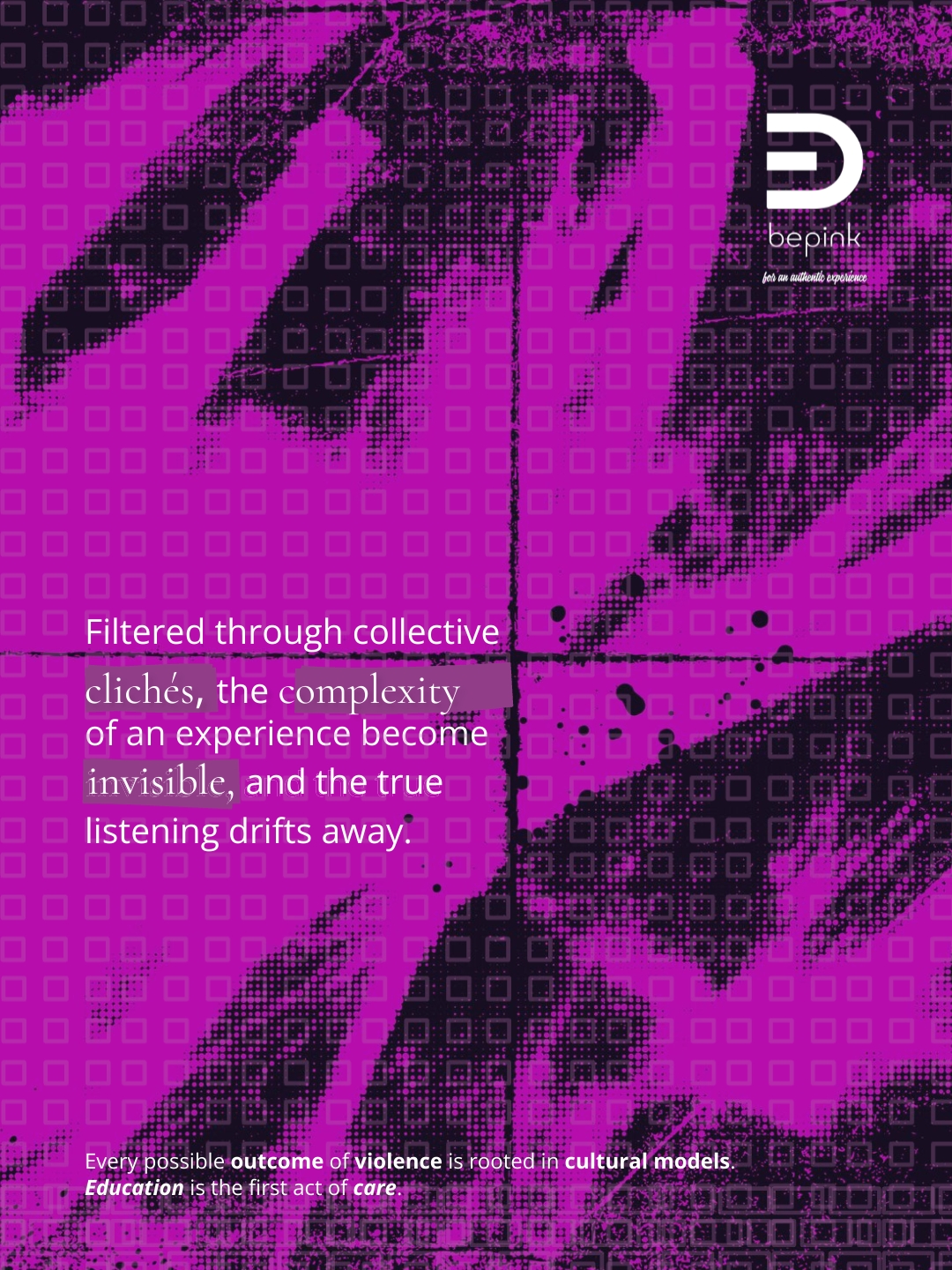
Filtered through collective clichés, the complexity of an experience becomes invisible and listening moves further away.
Women and Migrant Nationality
Education Is the First Act of Care.EVERY POSSIBLE OUTCOME OF VIOLENCE IS ROOTED IN CULTURAL MODELS THAT MAKE IT THINKABLE.
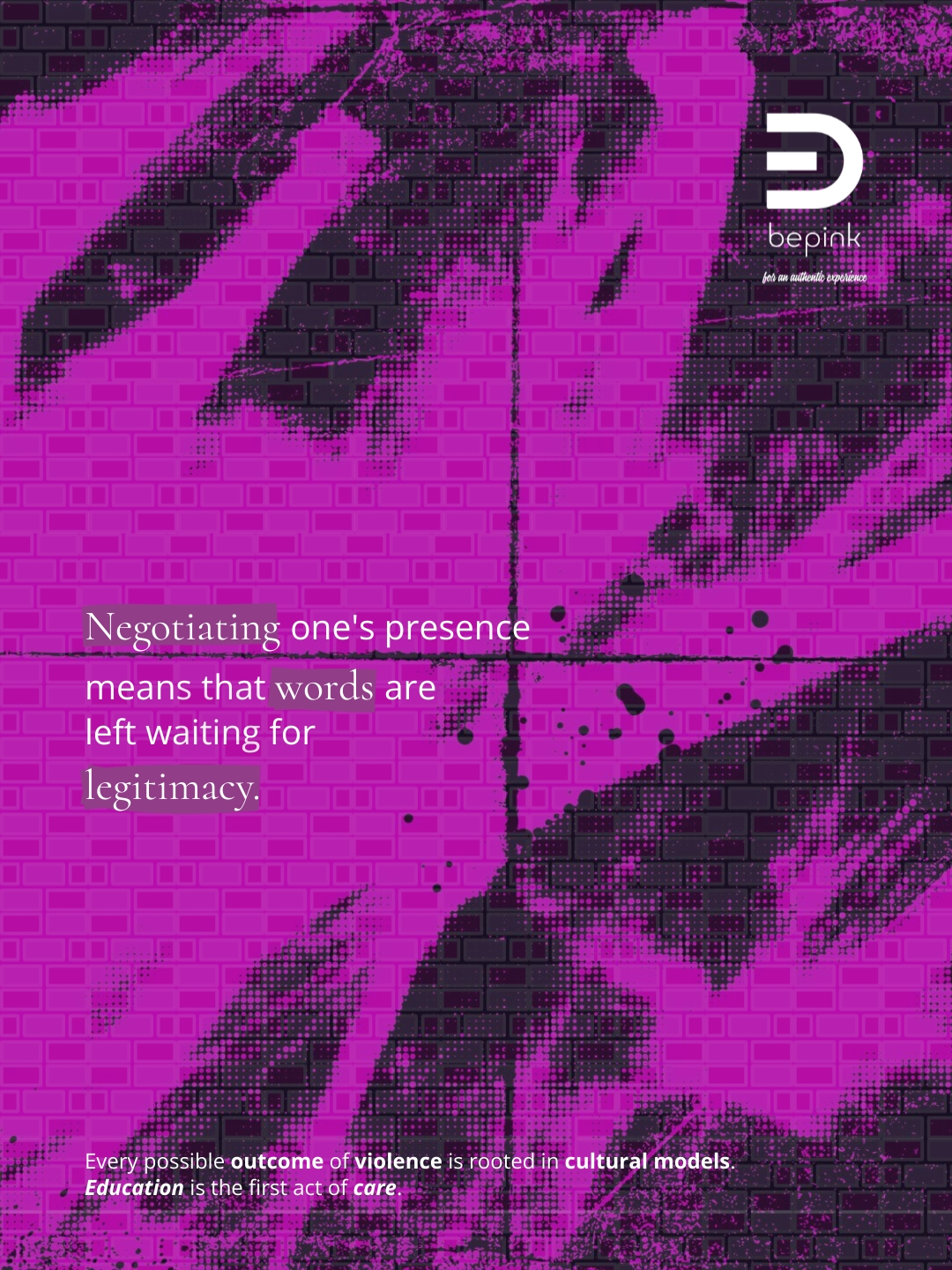
Negotiating one’s presence means that words remain waiting for legitimisation.
Where distance begins
A woman living in a migrant condition may find her voice filtered through the language she speaks or her legal status.
A woman in an unstable socio-economic position has fewer material chances to leave relationships or environments that create risk.
A woman belonging to a diasporic context may see her experience compressed into categories that leave no room for complexity.
Across these three axes, violence is not an “event.”
It is the consequence of reduced options, interrupted listening, and uneven protection.
Frames that shape what we see
The point is recognizing that frames shape what we notice — and what we overlook.
More precisely, we’re talking about interpretive frames: the linguistic, social, and institutional structures that decide what appears credible, what appears urgent, what appears “normal.”
And this new Index shows us that the distance isn’t just numerical.
It is a distance of recognition.
Women and Socio-economic Position
Education Is the First Act of Care.EVERY POSSIBLE OUTCOME OF VIOLENCE IS ROOTED IN CULTURAL MODELS THAT MAKE IT THINKABLE.
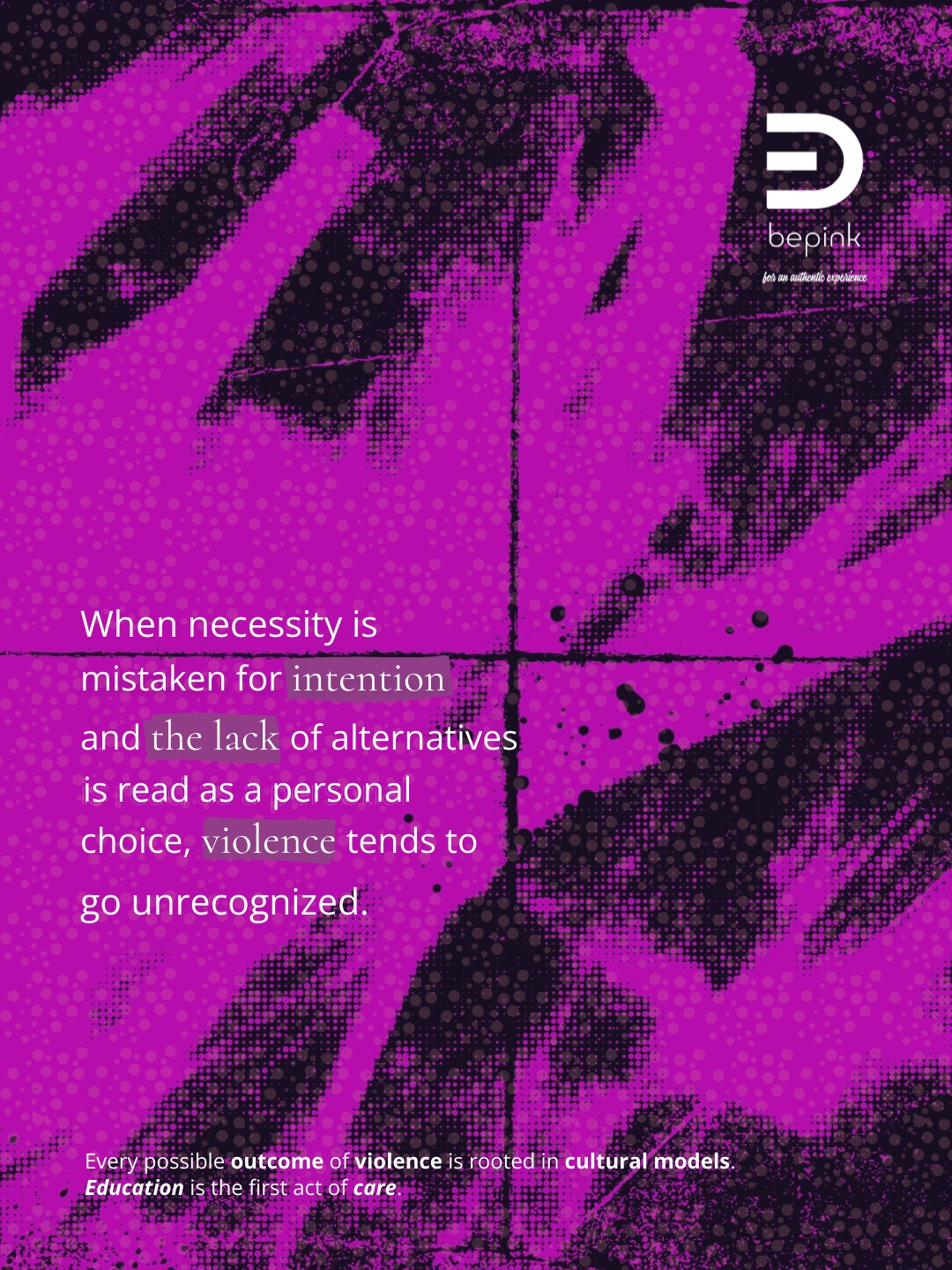
When necessity is read as will, and the absence of alternatives as personal choice, violence tends not to be recognised.
10 CARD
Education Is the First Act of Care.EVERY POSSIBLE OUTCOME OF VIOLENCE IS ROOTED IN CULTURAL MODELS THAT MAKE IT THINKABLE.
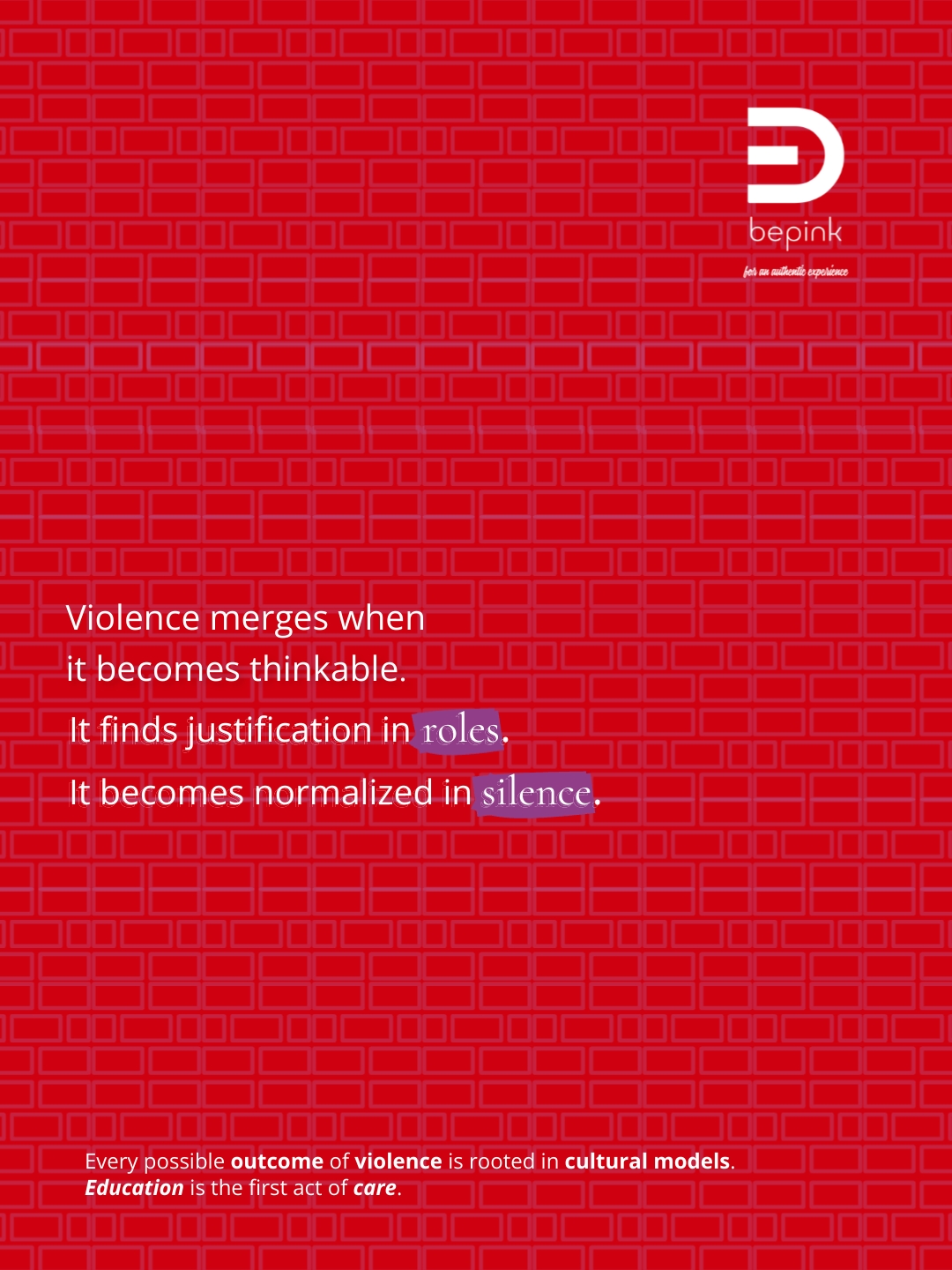
Violence emerges when it becomes thinkable.
It finds justification in roles.
It becomes normalized in silence.
Conclusion: transforming the data, transforming the possible
The Gender Equality Index 2025 does more than measure the gap.
It measures the conditions that make it possible to transform that gap.
The ghost quarter shows us the time that is taken away.
Cultural models can show us how to give it back: by expanding listening, distributing opportunities, and rethinking the conditions that precede violence — not only those that follow it.
And there is no future without cultural models capable of rereading — and transforming — those conditions.